Showing posts with label messiah. Show all posts

Thursday, December 08, 2022

Symphony Review: Laurence Cummings' "Messiah" walks in darkness

'Tis the season for Handel's "Messiah." This past weekend (December 2-4), Laurence Cummings conducted the St. Louis Symphony Orchestra and Chorus (under guest choral director Patrick Dupré Quigley) in three traditional, Baroque-sized performances of Handel’s Greatest Hit.

Laurence Cummings
Photo: Robert Workman

Every conductor, in my experience, assembles their own “Messiah” from the 57 separate numbers Handel wrote. Handel himself had no hesitation about doing so. That means every “Messiah” is slightly different.

Cummings’s “Messiah” was less celebratory and more reverential than previous versions I have seen at Powell Hall. It felt more informed by the Passion aspect of the piece than, say, the bracing version Bernard Labadie gave us back in 2015 or even the more dramatic Matthew Halls “Messiah” from 2018. That made the work no less compelling, though, and added a sense that we were on a journey from darkness into light. Besides, any “Messiah” that doesn’t seriously mess with Handel is welcome at what Dickens calls “this festive season of the year.”

First performed on April 13th, 1742, in Dublin, “Messiah” was, at least during Handel’s lifetime, generally regarded as appropriate for Easter rather than for Christmas.  After all, only the first of its three sections is devoted to the Annunciation. Part two is all about the Passion and the Resurrection (which is why it concludes with the famous “Hallelujah” chorus), while Part 3 deals with Judgement Day. So, even though it was part of the SLSO’s Christmas programming, this was ultimately a “Messiah” that would have been an equally good fit for Lent and Easter.

Jonathon Adams
Photo: Ayako Nishibori

The tone was set in the opening “Sinfonia.” It’s a typical example of what’s called a “French overture,” with a slow introduction followed by a more lively, dance-like fugal section. Cummings’s tempos were on the slow side for both, signaling the more solemn intent of the performance. The following two numbers—“Comfort ye, comfort ye my people” and “Ev’ry valley shall be exalted”—reinforced that feeling, thanks to tenor John Matthew Myers’s commanding stage presence, ringing voice, and clear communication of the text.

All four of the soloists, in fact, had strong, flexible voices. Baritone Jonathon Adams was an authoritative “voice of God” in “Thus saith the Lord,” “Why do the nations so furiously rage together” and, with the crystal-clear accompaniment of trumpeters Julian Kaplan and Austin Williams, “The trumpet shall sound.” Soprano Amanda Forsythe had fewer solos, but they were all tremendously effective. The entire “There were shepherds abiding in the fields” sequence radiated joy and featured some stunning top notes.  She, Adams, and Myers all clearly knew their parts well, and reached out to draw the audience into the emotional core of their songs.

The alto role was sung by countertenor Key’mon Murrah—an unusual but by no means unprecedented substitution that goes back to Handel’s time. Like his fellow soloists he had a solid voice with a particularly impressive high end and, also like the other soloists, he had a good feel for the Baroque concept of vocal ornamentation—something that’s not always a given with contemporary singers. He did not, however, seem to be as comfortable with the music as the others, and appeared to be much more dependent on his copy of the score, rarely engaging with the audience.

Amanda Forsythe
Photo: Arielle Doneson

The chorus does most of the heavy lifting in “Messiah,” and here the SLSO chorus continued living up to the high standards it set during the tenure of Amy Kaiser, who retired at the end of the 2021-2011 season. Enunciation was crisp, with even the most heavily melismatic sections wonderfully clear. Examples include “For unto us a child is born” and the contrary movement of the vocal lines in “All we like sheep have gone astray” (one of the many examples of Handel’s word painting).

The singers delivered the more emotionally charged numbers with fervor, including “Glory to God in the highest” and the excessively famous “Hallelujah” that concludes Part 2. And they did it without overwhelming the orchestra even though, with over 70 singers, they were twice the size of the band.

Much as Handel did in his day, Cummings conducted from one of two harpsichords, with Mark Shuldiner backing him up on the second instrument.  Shuldiner switched to the positif organ for the choruses, which allowed Cummings to use both hands to conduct the singers and the orchestra. The organ had a surprisingly hefty sound despite its small size, which added a nice sense of weight to the choral sections.

John Matthew Myers
Photo: Fay Fox

Cummings displayed a good feel for the theatrical aspects of “Messiah.” Prior to “Messiah” Handel had been known for his many operas. Switching to sacred subjects didn’t dilute his dramatic edge, so a little staging never hurts. Cummings had the soloists seated at the far sides of the stage when they weren’t singing, allowing them to make theatrical entrances and exits for their moments in the spotlight. It was a nice touch and spared the singers from having to stay seated front and center when the focus wasn’t on them.

Placing the trumpets up in the dress circle for the jubilant “Glory to God in the highest” was another nice touch, allowing the Good News to literally descend “from on high.”

Last but by no means least, let’s hand out some holly wreathes to the members of the SLSO for their excellent work as both soloists and ensemble members. A tip of the holiday hat is due to, among others, Assistant Concertmaster Erin Schreiber in “If God be for us,” Principal Tympani Shannon Wood in “Hallelujah,” and oboes Philip Ross and Xiomara Mass in the choral passages.
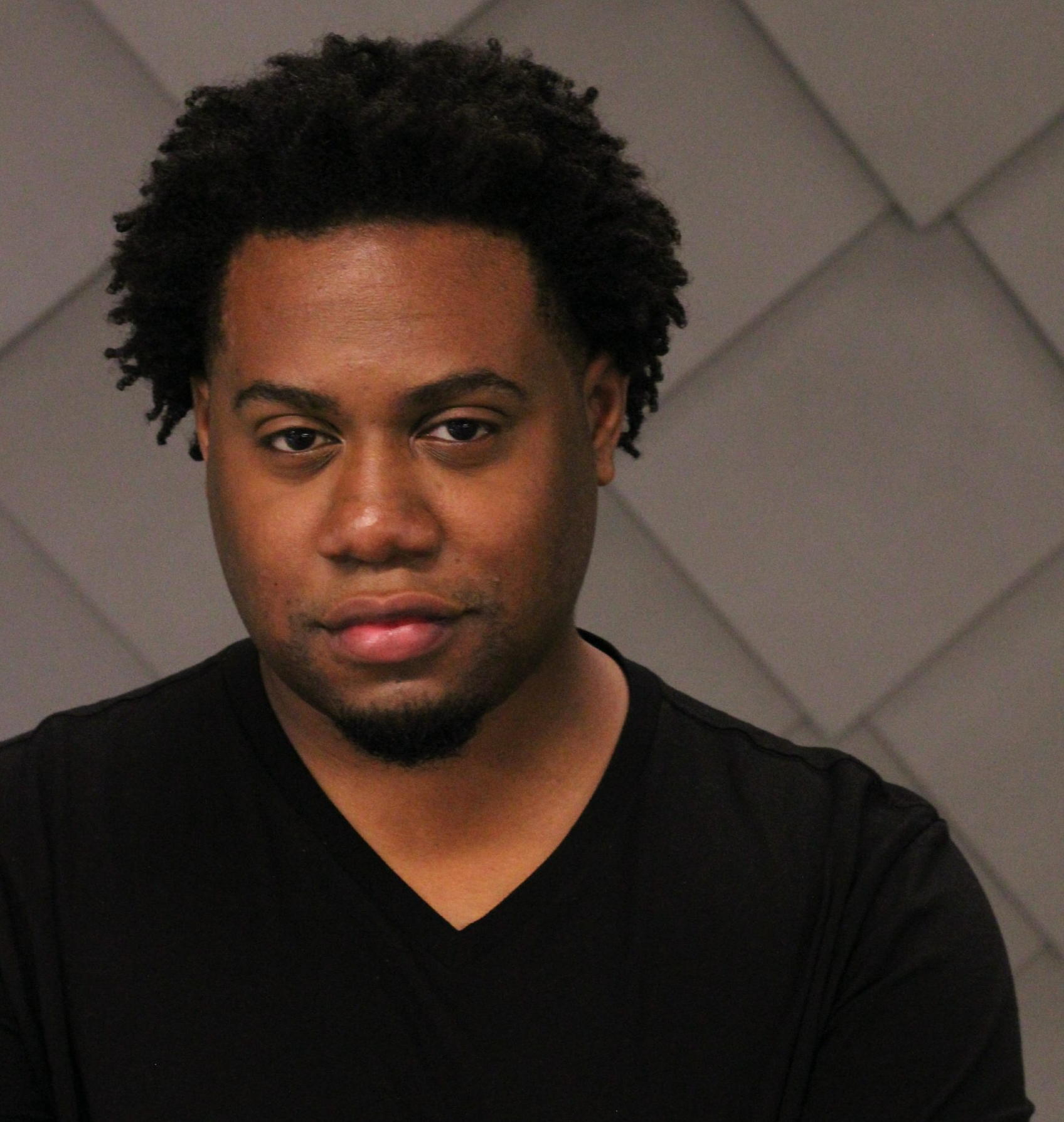
Key’mon Murrah
Photo: SLSO

The bottom line is that “Messiah” is a work that supports a wide variety of arrangements and interpretations. Every performance I have seen at Powell Hall since I started covering the SLSO on a regular basis over a decade ago has been faithful to the score’s Baroque roots, and yet each one has been a winner it its own unique way. The Cummings “Messiah” made a fine addition to that illustrious list.

Next at Powell Hall: Dame Jane Glover conducts an all-Mozart program consisting of the Symphony No. 36, K. 425 (“Linz”), the Violin Concerto No. 4 (with Concertmaster David Halen as soloist), and the Symphony No. 38, K. 504 (“Prague”). Performances are Friday at 10:30 am, Saturday at 8 pm, and Sunday at 3 pm, December 9-11. The Saturday concert will be broadcast live on St. Louis Public Radio and Classic 107.3.

Wednesday, November 30, 2022

Symphony Preview: The 'Messiah' Mysteries

This weekend (December 2-4) British conductor and Baroque-era specialist Laurence Cumings leads the St. Louis Symphony Orchestra and Chorus in Handel's popular 1742 oratorio "Messiah." In doing so, he's following a tradition nearly two centuries old. The origin of that tradition is the first of our three "Messiah Mysteries." [NOTE: this includes some additional bits of trivia in mystery #3 added on Friday, December 2nd].

[Preview the music with the SLSO's commercial-free Spotify playlist.]

G.F. Handel

1. The Adventure of the Moving Messiah

Handel's "Messiah" is a Christmas tradition. Which is odd, because (as I noted when the SLSO last played the piece back in 2018) the composer never intended "Messiah" to be Christmas music.

The oratorio was first performed on April 13th, 1742 in Dublin, repeated that same June, and then moved to London, where it was first presented on March 23, 1743. I can't find any evidence that the work was in any way associated with Christmas during Handel's life. In fact, as Christopher H. Gibbs points out in his program notes for a 2007 NPR broadcast of Messiah from Philadelphia , "Handel performed it some three dozen times--every time, it should be noted, around Easter, not Christmas."

And then there's the fact that Jesus himself never even puts in an appearance. The key dramatic events described in "Messiah" happen off stage. Would-be playwrights and screenwriters are usually told to "show, not tell." The libretto for "Messiah," by upper-crust arts patron Charles Jennens, does the opposite. In that respect, "Messiah" is an outlier even among Handel's other oratorios. As Howard E. Smither writes in the Grove Dictionary, Jennens's libretto is "a purely biblical, non-dramatic text, and as such is not representative of the Handelian oratorio, which is essentially a dramatic genre."

Still, as Jonathan Kandell notes in an article for the September 2009 edition of Smithsonian, "[b]y the early 19th century, performances of Messiah had become an even stronger Yuletide tradition in the United States than in Britain."

An important piece of the puzzle is supplied is supplied by Luke Howard in his program notes for a 2009 "Messiah" performance by UMS Choral Union:

The tradition of performing Messiah at Christmas began later in the 18th century. Although the work was occasionally performed during Advent in Dublin, the oratorio was usually regarded in England as an entertainment for the penitential season of Lent, when performances of opera were banned...But in 1791, the Cæcilian Society of London began its annual Christmas performances, and in 1818 the Handel and Haydn Society of Boston gave the work's first complete performance in the US on Christmas Day--establishing a tradition that continues to the present.

It apparently took a while for the Christmas tradition to become well established, though. As Marie Gangemil of the Oratorio Society of New York wrote in her program notes for their 2012 "Messiah," the first December performance by that organization didn't take place until 1874.

But are these events sufficient to explain why the tradition became so widespread? Might there also be a supply and demand issue here? As Laurence Cummings observed in the Smithsonian article cited above: "There is so much fine Easter music--Bach's St. Matthew Passion, most especially--and so little great sacral music written for Christmas. But the whole first part of Messiah is about the birth of Christ."

Charles Jennens
Painting by Thomas Hudson

So there you have it. Boston and New York picked up the idea from London, and the rest of the USA, seeing a chance to fill a product gap, picked it up from them. It's a reminder that memes were spreading long before the Internet, just a lot more slowly.

2. The Case of the Upright Audience

Another puzzle connected with "Messiah" is the business of standing during the "Hallelujah" chorus that ends Part II.

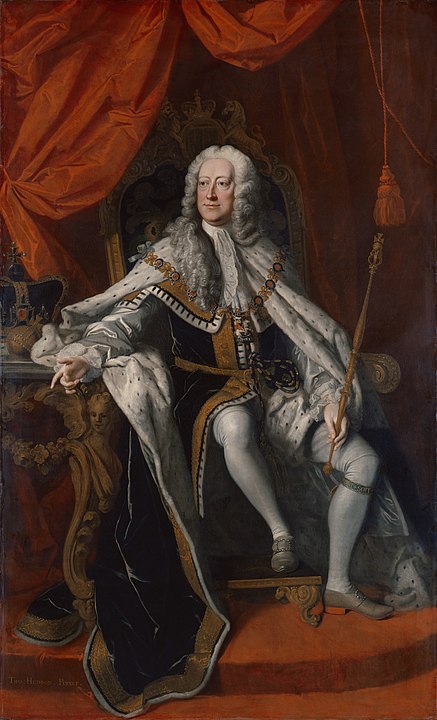
If you've been a classical music lover long enough, you have no doubt heard the story of how King George the II stood when he first heard it at the 1743 London premier and how everybody else followed suit because, hey, he was the king. It's a great story with only one little flaw: there's no evidence that George II ever attended a performance of "Messiah" at all.

The story appears to come, not from a contemporary account, but (according to Matthew Guerrieri in a 2009 article for the Boston Globe) from a secondhand description in a letter written by James Beattie 37 years later. The story is almost certainly apocryphal, and a classic example of how urban legends originate.

The tradition appears to go back a long way, though. When George Harris attended a "Messiah" performance in 1750 he observed that "[a]t some of the chorus's the company stood up," suggesting that the custom extended beyond just the "Hallelujah." Six years later, another account mentions the audience standing for "grand choruses." In his video series on "Messiah" Andrew Megill, Music Director of Masterwork Chorus, describes a letter written by a woman who attended a Messiah in Handel's time complaining of audience members who weren't standing during the appropriate choruses--suggesting that the practice was already fairly well established.

The bottom line, though, is that nobody really seems to know where the custom originated or, for that matter, why so many of us are still doing it. Maybe early audiences were just so swept away by the power of some of the choruses they stood up spontaneously and the custom simply caught on. Like the Christmas performance tradition, it seems to be a meme that just won't die.

For anyone attending "Messiah" for the first time, it must seem just another example of the sometimes baffling and contradictory rules of etiquette that go with classical music concerts. But that's a whole different subject.

3. The Incredible Expanding Orchestra

He wouldn't stand for Messiah
George II by Thomas Hudson, 1744

Finally, a note on the size of the orchestra you'll see this weekend. That first performance of "Messiah" back in 1743 probably used around 20 singers in toto, including soloists, along with an orchestra of strings, two trumpets, and tympani. Handel himself varied the orchestration of "Messiah" depending on the resources available for a particular performance as well as the size of the hall and other factors. 

Still, the Great Expansion didn't really kick in until after Handel's death, when it became customary to re-orchestrate and expand the size of the instrumental and (as a result) choral forces used to bring "Messiah" more in line with contemporary tastes. The German-language version Mozart prepared for his long-time patron Gottfried van Swieten in 1789 (officially "Der Messias," K. 572) is one of the earliest and best-known examples, but there have been numerous others.

This wasn't the only case of Mozart messing with "Messiah," by the way. Listen to "And with his stripes we are healed" in Part 2 back-to-back with the "Kyrie" from the Requiem, K. 626 and you will probably notice a certain (ahem) similarity. Composers not infrequently borrowed from each other in the 17th and 18th centuries and I expect that Mozart meant this as an homage to Handel rather than a simple ripoff.

During the 19th century, expanding "Messiah" began to take on the aspect of an arms race, with each subsequent performance determined to become more grandiose than the last. The 1857 Great Handel Festival at London's Crystal Palace employed 2000 singers and an orchestra of nearly 400. Later performances at the same venue became even more bloated. By 1877 George Bernard Shaw, for one, cried "hold, enough." "Why," he asked, "instead of wasting huge sums on the multitudinous dullness of a Handel Festival does not somebody set up a thoroughly rehearsed and exhaustively studied performance of the Messiah in St James's Hall with a chorus of twenty capable artists? Most of us would be glad to hear the work seriously performed once before we die."

I don't know whether or not Shaw, who died in 1950, eventually got his wish. The tide did begin to turn back to Handel's original intentions in the 20th century, though, and by the 1960s performing additions began to show up based on the composer's original manuscripts and using instruments appropriate to the period. The 1965 edition by Watkins Shaw was probably the earliest but it was a Basil Lam edition that was used in a groundbreaking 1967 Angel/EMI recording by The Ambrosian Singers and the English Chamber Orchestra. That recording would be the first of many that would return to something like Handel's original intentions.

As you might expect from a Baroque music guru, Cummings will be using an orchestra of 40 musicians, including two trumpets, two oboes, one bassoon, and tympani. I don't know how large the chorus will be, but it's a safe bet it will be sized appropriately to the orchestra. In this respect, Cummings is in line with previous "Messiah" performances over the past decade by Matthew Halls (2018), Bernard Labadie (2015), and Christopher Warren Green (2012).

The actual length of "Messiah" also varied from performance to performance. A complete "Messiah" contains either 47 or 53 numbers (depending on which edition you use) and can run just under two and one-half hours, not including an intermission. These days, you're more likely to encounter a "Messiah" that clocks in at around two hours, which is what you can expect to hear this weekend.

There are also alternate versions Handel prepared for a dozen of those numbers. "Rejoice greatly" is Part 1, for example, exists in versions using both 4/4 and 12/8 time signatures. The former sounds like a march, the latter like a dance. Which one a particular conductor uses is prety much up to them. The 1976 recording in the SLSO's Spotify playlist (The Academy of St. Martin-in-the-Fields under Neville Marriner) uses the 12/8 score (my personal preference).

The Essentials:  Laurence Cummings leads the St. Louis Symphony Orchestra and Chorus in Handel's "Messiah"  Friday at 7:30 pm, Saturday at 8 pm, and Sunday at 3 pm, December 2-4. The Saturday concert will be broadcast live on St. Louis Public Radio and Classic 107.3.

This article originally appeared at 88.1 KDHX, where Chuck Lavazzi is the senior performing arts critic.

Wednesday, December 12, 2018

Review: Going for Baroque, with with a Romantic sensibility

Matthew Halls
Photo by Christopher Meyers,
Oregon Bach Festival
Even though it was originally written for an Easter season performance, Handel's 1741 oratorio "Messiah" has become a Christmas tradition. That tradition was upheld in fine style last weekend (December 7-9) as guest conductor Matthew Halls and the St. Louis Symphony Orchestra and Chorus presented a performance of Handel's Greatest Hit that combined Baroque orchestration with a Romantic sensibility.

[Find out more about the music with my symphony preview articles: Part 1 and Part 2.]

There was a time not so very long ago when the philosophy behind presentations of "Messiah" was "bigger is better." Throughout the 19th century and most of the 20th, massive orchestras and gigantic choirs were the rule. George Bernard Shaw, in his role of music critic, want to far as to lament the "multitudinous dullness" of the big band "Messiah" that had become the rule in Britain. That began to change in the late 1960s, especially after the success of recordings by Colin Davis and Charles Mackerras that used the smaller orchestras and choruses of Handel's own day.

Krisztina Szabó
Photo by Bo Huang
Conducting without a score or baton, Mr. Halls gave us a "Messiah" Sunday afternoon that was very much in that more historically informed tradition. The chorus was, perhaps, a bit on the large side, but with fewer than 30 musicians the orchestra was one that would have been familiar to late 18th-century audiences, right down to the use of harpsichord and positif organ (a small portable organ that went out of fashion after the 18th century) as continuo instruments. The balance between singers and orchestra could hardly have been better.

Working from the 1965 Bärenreiter edition of the score (there are around a dozen editions available), Mr. Halls assembled his own version of "Messiah," as many conductors do. I'm no "Messiah" expert, but the changes and cuts he made felt relatively minor to me. In any case, the performance worked very well, both as drama and music, and that's ultimately the real test.

Karina Gauvin
Photo by Julien Faugère
The four soloists were very well matched in terms of vocal power and style. Making her SLSO debut, mezzo Krisztina Szabó sang the alto role with authority and impressive precision. Her "But who may abide" conveyed the stern authority of the text very well, while there was real joy in "Oh thou that tellest good tidings to Zion." Her "He was despised" conveyed apparent grief at the sufferings of Christ.

With a light, clear voice, soprano Karina Gauvin convincingly conveyed the good cheer of "Rejoice greatly" and the simple grace of "How beautiful are the feet of them." Tenor Nicholas Phan, who did such a remarkable job with Britten's "Les Illuminations" back in 2014, brought great tenderness to "Comfort ye," followed by a bracing "Ev'ry valley."

Nicholas Phan
Baritone William Berger, also making his local debut, was an imposing "voice of God" in "Thus saith the Lord" and displayed both impressive virtuosity and dramatic commitment to "The trumpet shall sound." It's Handel's oddly celebratory invocation of judgment day, featuring a spectacular duet for the solo singer and trumpet. Associate Principal trumpet Tom Drake executed that solo line flawlessly. Indeed, the whole orchestra was in fine form.

Mr. Halls's interpretation, while not neglecting the festive aspects of Handel's score, included moments of compelling drama as well. You could see that in, to pick just one example, the progression from darkness to light that starts with "The people that walked in darkness" and ends with "For unto us a Child is born." His decision to have the chorus close their books and sing the famous "Hallelujah" chorus from memory was a neat theatrical touch, as was the placement of trumpeters Tom Drake and Mike Walk on the chorus platform for "Glory to God" in Part I. It allowed their bright, clear tones to project that much more effectively.

William Berger
Photo by Paul Foster Williams
Amy Kaiser's chorus never fails to elicit admiration on my part. They invariably sing with a gratifying power and precision. Every bit of the text came through clearly Sunday afternoon, as did the many polyphonic passages.

There have been some fine performances of Handel's "Messiah" at Powell Hall over the years, and while Bernard Labadie's 2015 version is still my favorite, this latest entry was a strong one and I'm glad I had the opportunity to see it.

The regular SLSO season pauses for the rest of December as Powell Hall fills with special holiday programming. This weekend (December 14-16) Joshua Gersen conducts the orchestra and Webster University Chorale in a showing of the film comedy Home Alone, with the score played live by the orchestra and chorus; only limited view tickets are available. Next week brings the sold-out "Gospel Christmas" with the IN UNISON chorus conducted by Kevin McBeth and special guests Take 6 on Thursday, December 20, followed by the annual Mercy Holiday Celebration Friday through Sunday with Gemma New on the podium.

The month concludes with "Walt Disney Animation Studios: A Decade in Concert" Friday and Saturday, December 28 and 29, followed by the popular "BMO Private Bank New Year's Eve Celebration" on Monday, December 31, with former Resident Conductor Ward Stare conducting. All concerts take place at Powell Hall in Grand Center.

Tuesday, December 04, 2018

Symphony Preview: Why a "Messiah"?

G.F. Handel
Share on Google+:

This weekend (December 7 - 9) British conductor Matthew Halls leads the St. Louis Symphony Orchestra and Chorus in Handel's popular 1742 oratorio "Messiah." In doing so, he's following a tradition nearly two centuries old.

Which is odd, because (as I wrote in a preview article for the SLSO's 2015 performance of "Messiah") the composer never intended the piece to be Christmas music.

The oratorio was first performed on April 13th, 1742 in Dublin, repeated that same June, and then moved to London, where it was first presented on March 23, 1743. I can't find any evidence that the work was in any way associated with Christmas during Handel's life. In fact, as Christopher H. Gibbs points out in his program notes for a 2007 NPR broadcast of Messiah from Philadelphia , "Handel performed it some three dozen times--every time, it should be noted, around Easter, not Christmas."

And then there's the fact that Jesus himself never even puts in an appearance. "Jesus is born without mention of his mother or any wise men," writes Tim Munro in his program notes for the SLSO. "Jesus's specific good works don't appear, and the disciples are entirely absent. And Jesus dies, but there is no Pilate, no real mention of a crucifixion."

Charles Jennens
Painting by Thomas Hudson
Indeed, the key dramatic events described in "Messiah" happen off stage. Would-be playwrights and screenwriters are usually told to "show, not tell." The libretto for "Messiah," by upper-crust arts patron Charles Jennens, does the opposite.

Still, as Jonathan Kandell notes in an article for the September 2009 edition of Smithsonian, "[b]y the early 19th century, performances of Messiah had become an even stronger Yuletide tradition in the United States than in Britain."

An important piece of the puzzle is supplied is supplied by Luke Howard in his program notes for a 2009 "Messiah" performance by UMS Choral Union:
The tradition of performing Messiah at Christmas began later in the 18th century. Although the work was occasionally performed during Advent in Dublin, the oratorio was usually regarded in England as an entertainment for the penitential season of Lent, when performances of opera were banned. Messiah's extended musical focus on Christ's redeeming sacrifice also makes it particularly suitable for Passion Week and Holy Week, the periods when it was usually performed during Handel's lifetime. But in 1791, the Cæcilian Society of London began its annual Christmas performances, and in 1818 the Handel and Haydn Society of Boston gave the work's first complete performance in the US on Christmas Day--establishing a tradition that continues to the present.
It apparently took a while for the Christmas tradition to become well established, though. As Marie Gangemil of the Oratorio Society of New York wrote in her program notes for their 2012 "Messiah," the first December performance by that organization didn't take place until 1874.

But are these events sufficient to explain why the tradition became so widespread? Might there also be a supply and demand issue here? As Laurence Cummings (director of the London Handel Orchestra) observed in the Smithsonian article cited above: "There is so much fine Easter music--Bach's St. Matthew Passion, most especially--and so little great sacral music written for Christmas. But the whole first part of Messiah is about the birth of Christ."

So there you have it. Boston and New York picked up the idea from London, and the rest of the USA, seeing a chance to fill a product gap, picked it up from them. It's a reminder that memes were spreading long before the Internet, just a lot more slowly.

Another puzzle connected with "Messiah" is the business of standing during the "Hallelujah" chorus that ends Part II. More on that anon.

Finally, a few quick words about this weekend's conductor. Originally a keyboard player and early music specialist, Matthew Halls has since expanded his repertoire to include Mozart, Mendelssohn, Beethoven, Rachmaninoff, and even Messiaen and Michael Tippet. Reviewing his Beethoven Symphony No. 9 with the Toronto Symphony, the Toronto Star said that he "captured much of the energy and excitement that its first audience must have felt at its premiere nearly 200 years ago." He made a notable debut with the SLSO this past February and I look forward to seeing what he does with Handel's classic this weekend.

The Essentials: Matthew Halls conducts the St. Louis Symphony Orchestra and Chorus Friday and Saturday at 8 pm and Sunday at 3 pm, December 7 - 9 in Handel's "Messiah". Soloists are soprano Karina Gauvin, mezzo-soprano Krisztina Szabó, tenor Nicholas Phan, and baritone William Berger. Performances take place at Powell Hall in Grand Center.

Sunday, December 06, 2015

Symphony Review: A resplendent "Messiah" with Bernard Labadie and soloists, December 3-6, 2015

Bernard Labadie
Photo: Francois Rivard
As I noted in one of my symphony preview posts a few days ago, it's far from clear exactly what set of historical accidents turned George Frederick Handel's 1741 oratorio "The Messiah" into a Christmas tradition here in the USA. But traditional it is, and the St. Louis Symphony Orchestra and Chorus, under the direction of early music specialist Bernard Labadie, are observing it in fine style this weekend.

[Get more out of the music with my preview articles—part 1 and part 2]

Conducting without a score, a baton, or (for that matter) a podium, Mr. Labadie creates a luminous, bracing, and altogether splendid "Messiah". It's beautifully played, impeccably sung, and filled with small touches that allow Mr. Labadie to put his own unique stamp on the music without getting in the way of Handel's music. His "Hallelujah" chorus, for example, has subtle dynamic shadings that make this well-worn number feel almost brand new, and the slow diminuendo at the end of "We like sheep" was so striking and unexpected that it drew spontaneous applause on opening night. The final "Amen" was beautifully structured, building slowly and powerfully so that the final entrance by the sopranos felt like a ray of light suddenly bursting through the windows of his musical cathedral.

Allyson McHardy
So, yeah, magical moments all around.

"Messiah" is not the most theatrical of Handel's oratorios, but even so it works best when the soloists understand and convey often highly charged emotions in the text and the score. All four of this weekend's singers do that, with perhaps the most fully engaged performances coming from mezzo Allyson McHardy and, most impressively, from bass-baritone Kyle Ketelsen, who was a last-minute substitution for an ailing Philippe Sly.

Ms. McHardy, cutting a commanding figure in an emerald-green skirt and lacy black top, showed impressive power and variety. She's the imperious voice of doom in "But who may abide the day of His coming" and then the voice of hope in "O thou that tellest good tidings." Her role is written for an alto, but I thought Ms. McHardy had plenty of power in her low notes.

Kyle Ketelsen
Photo: Dario Acosta
Mr. Ketelsen was fully engaged with the text as well. His "The people that walked in darkness" was gripping, as was the dramatic "Why do the nations so furiously," a minor vocal glitch not withstanding. Like Ms. McHardy, he has a voice with a very solid low end, projecting easily into the hall.

Soprano Lydia Teuscher doesn't have much in the way of stage experience in her resume, but you'd never know it from the way she communicates the emotional core of her lyrics. Resplendent in a gold gown, she simply glowed in "Rejoice greatly, O daughter of Zion" and in the recitatives leading up to the chorus's "Glory to God in the highest."

On the night we attended, tenor Jeremy Ovenden didn't have quite the vocal power of his fellow soloists, but he had all the flexibility and accuracy you could ask for in "Comfort ye, my people" and "Every valley shall be exalted." Those two numbers are the first vocal sounds we hear after the opening "Sinfonia" so it's vital that they make a strong impression, and he nailed them.

Lydia Teuscher
Amy Kaiser's chorus never fails to impress me with their fine vocal blend and accurate elocution, but I must say they are exceeding even their own high standards this time around. There was dramatic urgency in their "Surely He hath born our griefs" and real power in "He trusted in God that he would." Their "Glory to God in the highest" was sheer jubilation, amplified by the theatrical use of offstage trumpets in the dress circle.

The orchestra sounded at the top of their game as well, with fine work by the strings and flawless solos from Karin Bliznik and Jeff Strong on trumpets, among others. The continuo part was nicely realized by Maryse Carlin on harpsichord and Andrew Peters on positif organ (small portable organ that went out of fashion after the 18th century).

Jeremy Ovenden
I'm told that Mr. Labadie worked the orchestra and chorus particularly hard in rehearsals, making sure that they knew every nuance of his highly personal approach to the well-known music. That effort has paid off in a "Messiah" that respects Handel, but does so in a way that is all Mr. Labadie's own. I really can't recommend this performance highly enough.

The St. Louis Symphony's "Messiah" continues through Sunday, December 6th, at Powell Hall in Grand Center. Next weekend, the SLSO goes to the movies as David Robertson conducts a program of the music of John Williams December 11-13. For more information: stlsymphony.org.

Tuesday, December 01, 2015

Symphony Preview, December 3-6, 2015, Part the Second: A long-standing tradition

Apparently not everyone stands for the "Hallelujah"
(Josh Reynolds for The Boston Globe)
In a recent post I looked at the way Handel's Messiah got moved from Easter to Christmas. This time I'd like to take a look at an even more puzzling question: Why does everyone stand during the "Hallelujah" chorus that concludes Part 2?

The usual explanation is that King George the II stood when he first heard it at the London premiere in March of 1743 and everybody else followed suit because, hey, he was the king. It's a great story with only one little flaw: there's no evidence that George II ever attended a performance of Messiah at all. The story appears to come, not from a contemporary account, but (according to Matthew Guerrieri in a 2009 article for the Boston Globe, whence cometh the picture above) from a secondhand description in a letter written by James Beattie 37 years later (a classic example of how urban legends originate). The story is, in short, almost certainly apocryphal.

The tradition appears to go back a long way, though. When George Harris attended a Messiah performance in 1750 he observed that "[a]t some of the chorus's the company stood up," suggesting that the custom extended beyond just the "Hallelujah." Six years later, another account mentions the audience standing for "grand choruses." In his video series on Messiah Andrew Megill, Music Director of Masterwork Chorus, describes a letter written by a woman who attended a Messiah in Handel's time complaining of audience members who weren't standing during the appropriate choruses—suggesting that the practice was already fairly well established.

The bottom line, though, is that nobody really seems to know where the custom originated or, for that matter, why so many of us are still doing it. Like the Christmas performance tradition, it seems to be a meme that just won't die. For anyone attending Messiah for the first time, it must seem just another example of the sometimes baffling and contradictory rules of etiquette that go with classical music concerts.

The Essentials: Bernard Labadie conducts the St. Louis Symphony Orchestra and Chorus, with soloists Lydia Teuscher, soprano; Allyson McHardy, mezzo-soprano; Jeremy Ovenden, tenor; and Kyle Ketelsen, bass-baritone, in Handel's Messiah. Performances are Thursday through Saturday at 8 p.m. and Sunday at 3 p.m., December 3-6. The concerts take place at Powell Symphony Hall, 718 North Grand in Grand Center. For more information: stlsymphony.org.

Symphony Preview, December 3-6, 2015, Part the First: Why a "Messiah"?

G.F. Handel, prospering
Share on Google+:

The Christmas season in upon us. For those of us keeping track of the entertainment scene, that means an inevitable encounter with at least one performance of all of the following: a stage adaptation of Dickens's A Christmas Carol (probably with music), Tchaikovsky's The Nutcracker, and Handel's Messiah. The latter is coming our way this weekend, in fact, from the St. Louis Symphony Orchestra and Chorus under the baton of early music specialist Bernard Labadie.

The Dickens and Tchaikovsky make perfect sense since they're both explicitly Christmas stories. But how did Messiah get in there? It was first performed on April 13th, 1742 in Dublin, repeated that same June, and then moved to London, where it was first presented on March 23, 1743. I can't find any evidence that the work was in any way associated with Christmas during Handel's life. In fact, as Christopher H. Gibbs points out in his program notes for a 2007 NPR broadcast of Messiah from Philadelphia , "Handel performed it some three dozen times—every time, it should be noted, around Easter, not Christmas." As Jonathan Kandell notes in an article for the September 2009 edition of Smithsonian, however, "[b]y the early 19th century, performances of Messiah had become an even stronger Yuletide tradition in the United States than in Britain."

An important piece of the puzzle is supplied is supplied by Luke Howard in his program notes for a 2009 Messiah performance by UMS Choral Union:
The tradition of performing Messiah at Christmas began later in the 18th century. Although the work was occasionally performed during Advent in Dublin, the oratorio was usually regarded in England as an entertainment for the penitential season of Lent, when performances of opera were banned. Messiah's extended musical focus on Christ's redeeming sacrifice also makes it particularly suitable for Passion Week and Holy Week, the periods when it was usually performed during Handel's lifetime. But in 1791, the Cæcilian Society of London began its annual Christmas performances, and in 1818 the Handel and Haydn Society of Boston gave the work's first complete performance in the US on Christmas Day—establishing a tradition that continues to the present.

It apparently took a while for the Christmas tradition to become well established, though. As Marie Gangemil of the Oratorio Society of New York wrote in her program notes for their 2012 Messiah, the first December performance by that organization didn't take place until 1874.

Bernard Labadie
But are these events sufficient to explain why the tradition became so widespread? Might there also be a supply and demand issue here? As Laurence Cummings (director of the London Handel Orchestra) observed in the Smithsonian article cited above: "There is so much fine Easter music—Bach's St. Matthew Passion, most especially—and so little great sacral music written for Christmas. But the whole first part of Messiah is about the birth of Christ."

So there you have it. Boston and New York picked up the idea from London, and the rest of the USA, seeing a chance to fill a product gap, picked it up from them. It's a reminder that memes were spreading long before the Internet, just a lot more slowly.

The Essentials: Bernard Labadie conducts the St. Louis Symphony Orchestra and Chorus, with soloists Lydia Teuscher, soprano; Allyson McHardy, mezzo-soprano; Jeremy Ovenden, tenor; and Kyle Ketelsen, bass-baritone, in Handel's Messiah. Performances are Thursday through Saturday at 8 p.m. and Sunday at 3 p.m., December 3-6. The concerts take place at Powell Symphony Hall, 718 North Grand in Grand Center. For more information: stlsymphony.org.

Friday, December 26, 2014

Traditional Handel and a bouquet of carols highlight the Bach Society Candlelight Concert

Who: The Bach Society of St. Louis and the St. Louis Children's Choirs
What: Christmas Candlelight Concert
When: Tuesday, December 23, 2014
Where: Powell Symphony Hall

The Bach Society at Powell Hall
The Bach Society of St. Louis Christmas Candlelight Concert has been a St. Louis tradition since 1951 and, as this year's sold-out edition proved tonight, that tradition is grounded in fine musicianship and intelligent programming.

For those of you who have never had the pleasure of attending this annual gala, the concert is in two parts. The first is the more "serious" of the two and usually features the traditional classical repertoire.

This year we got the more "Christmassy" bits of Handel's "Messiah"—basically the more celebratory and uplifting numbers from Part I and the famous "Hallelujah!" chorus from Part II. Conductor A. Dennis Sparger, in his introductory remarks, promised a "HIP" (as in: Historically Informed Performance) interpretation but what we got sounded more conventional than that label implies. The soloists' vocal cadenzas were a bit more ornamented than usual but otherwise tempi and the overall approach were pretty much in the late 19th/early 20th century mainstream. It was a polished performance with exemplary work by the orchestra and chorus, just not what I expected.

Jane Jennings
wustl.edu
Soloists Jane Jennings (soprano), Debra Hillabrand (mezzo), and Don Frazure (tenor) were all solid, with Ms. Jennings showing the most emotional investment in the text. Ms. Hillabrand did not sound entirely comfortable with the lower notes in what is, after all, an alto part but was in good voice otherwise.

The second half of the concert was probably what most of the audience was waiting for: traditional carols sung by the Bach Society choir, assisted by the St. Louis Children's Choirs. It opens with the candlelight procession. The lights dim, and the members of the Bach Society walk down the aisles singing, each with an electric candle. If you're lucky enough to be sitting downstairs in the orchestra section, you're soon surrounded by singers - some carrying the melody, some the harmony, enveloping you in a constantly changing kaleidoscope of sound. Meanwhile the sound of the children's choir floats down from the dress circle upstairs. Charles Ives would have loved it; I know I did.

The rest of the evening was a well-chosen mix of traditional carols and more contemporary pieces. My favorite example of the latter was "Salvator Mundi", a suite of three 15th-17th century carols arranged by Welsh composer William Mathias in 1983 for children's chorus and conducted smartly by Bach Society Deputy Director Elizabeth Hogan McFarland. Other highlights included "O Salutaris Hostia" by contemporary Latvian composer Eriks Esenvalds with its two soaring solo soprano lines rendered with ethereal beauty by Jilliann Law-Grygier and Darcie Johnson and a lively arrangement of the traditional Catalan carol "Fum, Fum, Fum!" featuring (I think) Jennifer Nitchman on piccolo. A tip of the topper is also due Concertmaster Lenora-Myra Anop for her solo in the Barlow Bradford arrangement of the traditional Austrian carol "Still, Still, Still."

The two audience sing-along numbers were fun as well, although the David Willocks arrangement of "Hark, the Herald Angels Sing" was in a key that wasn't very friendly to us bass-baritone types.

The concert is over now, of course, but the Bach Society has other concerts planned for next year (its 75th anniversary), including a complete "Messiah" and a Bach "B Minor Mass." For more information, visit the Bach Society web site.

Sunday, December 16, 2012

A standing tradition

Apparently not everyone stands for the "Hallelujah"
(Josh Reynolds for The Boston Globe)
In a recent post I looked at the way Handel’s Messiah got moved from Easter to Christmas. This time I’d like to take a look at an even more puzzling question: Why does everyone stand during the “Hallelujah” chorus that concludes Part 2?

The usual explanation is that King George the II stood when he first heard it at the London premiere in March of 1743 and everybody else followed suit because, hey, he was the king. It’s a great story with only one little flaw: there’s no evidence that George II ever attended a performance of Messiah at all. The story appears to come, not from a contemporary account, but (according to Matthew Guerrieri in a 2009 article for the Boston Globe, whence cometh the picture above) from a secondhand description in a letter written by James Beattie 37 years later (a classic example of how urban legends originate). The story is, in short, almost certainly apocryphal.

The tradition appears to go back a long way, though. When George Harris attended a Messiah performance in 1750 he observed that “[a]t some of the chorus’s the company stood up,” suggesting that the custom extended beyond just the “Hallelujah.” Six years later, another account mentions the audience standing for “grand choruses.” In his video series on Messiah Andrew Megill, Music Director of Masterwork Chorus, describes a letter written by a woman who attended a Messiah in Handel’s time complaining of audience members who weren’t standing during the appropriate choruses—suggesting that the practice was already fairly well established.

The bottom line, though, is that nobody really seems to know where the custom originated or, for that matter, why so many of us are still doing it. Like the Christmas performance tradition, it seems to be a meme that just won’t die. For anyone attending Messiah for the first time, it must seem just another example of the sometimes baffling and contradictory rules of etiquette that go with classical music concerts.

We could probably do without some of those, by the way; but that’s another post.

Saturday, December 15, 2012

For unto us a meme is born

Share on Google+:

The Christmas season in upon us. For those of us keeping track of the entertainment scene, that means an inevitable encounter with at least one performance of all of the following: a stage adaptation of Dickens’s A Christmas Carol (probably with music), Tchaikovsky’s The Nutcracker, and Handel’s Messiah. In fact, we’ve already see all three here in St. Louis, including a nice Baroque-sized performance of the Handel by the St. Louis Symphony Orchestra and Chorus (see my review at 88.1 KDHX for details).

The Dickens and Tchaikovsky make perfect sense since they’re both explicitly Christmas stories. But how did Messiah get in there? It was first performed on April 13th, 1742 in Dublin, repeated that same June, and then moved to London, where it was first presented on March 23, 1743. I can’t find any evidence that the work was in any way associated with Christmas during Handel’s life. In fact, as Christopher H. Gibbs points out in his program notes for a 2007 NPR broadcast of Messiah from Philadelphia , “Handel performed it some three dozen times—every time, it should be noted, around Easter, not Christmas.” As Jonathan Kandell notes in an article for the September 2009 edition of Smithsonian, however, “[b]y the early 19th century, performances of Messiah had become an even stronger Yuletide tradition in the United States than in Britain.”

An important piece of the puzzle is supplied is supplied by Luke Howard in his program notes for a 2009 Messiah performance by UMS Choral Union:
The tradition of performing Messiah at Christmas began later in the 18th century. Although the work was occasionally performed during Advent in Dublin, the oratorio was usually regarded in England as an entertainment for the penitential season of Lent, when performances of opera were banned. Messiah’s extended musical focus on Christ’s redeeming sacrifice also makes it particularly suitable for Passion Week and Holy Week, the periods when it was usually performed during Handel’s lifetime. But in 1791, the Cæcilian Society of London began its annual Christmas performances, and in 1818 the Handel and Haydn Society of Boston gave the work’s first complete performance in the US on Christmas Day—establishing a tradition that continues to the present.

It apparently took a while for the Christmas tradition to become well established, though. As Marie Gangemil of the Oratorio Society of New York writes in her program notes for their upcoming Messiah, the first December performance by that organization didn’t take place until 1874.

But are these events sufficient to explain why the tradition became so widespread? Might there also be a supply and demand issue here? As Laurence Cummings (director of the London Handel Orchestra) observed in the Smithsonian article cited above: “There is so much fine Easter music—Bach's St. Matthew Passion, most especially—and so little great sacral music written for Christmas. But the whole first part of Messiah is about the birth of Christ."

So there you have it. Boston and New York picked up the idea from London, and the rest of the USA, seeing a chance to fill a product gap, picked it up from them. It’s a reminder that memes were spreading long before the Internet, just a lot more slowly.