Showing posts with label new year's eve. Show all posts

Monday, January 06, 2025

Symphony Review: The SLSO lights up the new year

The annual New Year’s Eve concert by the St. Louis Symphony Orchestra (SLSO) has always been a festive occasion and this year was no exception. Indeed, the mix of elegance and entertainment former SLSO Assistant Conductor Stephanie Childress brought was particularly welcome for many of us who view the coming few years with more than a little apprehension. As it says in John 1:5, “the light shineth in the darkness, and the darkness comprehended it not.”

[Find out more about the music with my symphony preview.]

This year the theme was “dance music from around the world,” and while that description turned out to be a bit of a stretch, the results spoke for themselves. The important thing is that the evening was bright, balanced, and good-humored—everything, in short, that it needed to be.

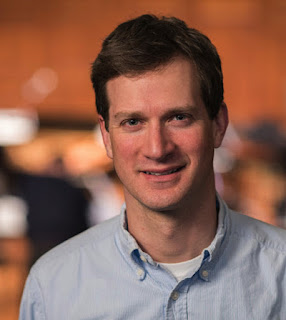
Steven Franklin
Photo courtesy of the SLSO

There were certainly more than enough dance-inspired pieces. The concert opened with a lively yet nuanced “Slavonic Dance No. 1” by Dvořák and was followed by the sparkling overture to Tchaikovsky’s “Nutcracker” ballet with (to quote Mr. Gilbert) “gaily tripping, lightly skipping” playing in the upper woodwinds.

Next was Anna Clyne’s 2013 “Masquerade,” a raucously cheerful work that felt like an exponentially more sophisticated take on the ground covered in Ketelby’s “Bank Holiday (‘appy ‘amstead).” It’s a wild sonic mashup that demands (and got) precise playing by the orchestra.

Clyne is one of those composers who can be profound OR playful as her whimsy takes her—an enviable skill, to say the least. Her music has often been heard at the SLSO, which will present the world premiere of her multi-media work “PALETTE” on Valentine’s Day weekend.

SLSO Principal Trumpet Steven Franklin and Principal Trombone Jonathan Randazzo were the soloists in a 2024 orchestral expansion of Joseph Turrin’s 2000 “Fandango” for trumpet, trombone, and concert bands. There’s flashy stuff here (close harmony and tricky double-tonguing, just for starters) that was played with a brilliance matching the soloists’ sequined tuxedos. Indeed, this is the first time I can recall a soloist’s wardrobe getting applause before the music even starts. Very New Year’s Eve, that.

Samuel Coleridge-Taylor’s orchestration of his kitschy solo piano bonbon “Valse de la Reine” (“The Queen’s Waltz”) offered a charming, easy-on-the-ears interlude between “Fandango” and the rousing Act I closer, Walton’s sweeping, patriotic “Crown Imperial (Coronation March).”

Composed for the coronation of King George VI in 1937, the piece is very much in the “Pomp and Circumstance” tradition with a fast opening tune and a broad, ceremonial march that makes its first appearance in the trio and returns in the big, all-stops-out coda. I first encountered this piece in the Frederick Fennell/Eastman Wind Ensemble Mercury recording of W. J. Duthoit’s band arrangement back in the 1960s and was impressed by the difficulty of some of the wind writing, particularly for the horns. The SLSO horn section got a richly deserved ovation for their performance Tuesday night.

The second half opened with "Danse Baccanale” from Camille Saint-Saëns’s 1876 opera “Samson et Dalila.” It opens quietly enough with a melismatic  oboe solo, sinuously delivered by Jelena Dirks, before moving quickly to the dance proper. It all builds to an appropriately orgiastic finale marked “Di piú in piú animato” (“more and more animated”), which conductors often interpret as “as fast as is humanly possible.” Certainly that’s what Childress gave us in this performance and while it was thrilling, it also felt as though it was all in danger of going off the rails at times. It never did, of course, but it made for a wild ride.

Jonathan Randazzo
Photo courtesy of the SLSO

Next was a bit of pure frivolity not listed in the program and introduced by Childress (accurately, IMO) as “the gooey butter cake of American light music”: Leroy Anderson’s “The Typewriter.” It is, as far as I know, the only work out there for typewriter and orchestra. The soloists (one for the typewriter and one for the bell) are usually members of the percussion section but this time both roles were taken by none other than Childress herself.

A gutsy move, that, considering (silly as this may sound) the difficulty of the typewriter part. It’s mostly eighth notes with an Allegro vivace tempo marking, and there are points at which both the typewriter and bell have to be hit simultaneously. That didn’t always happen at this concert, but it was all such good fun that nobody (including me) really cared. As Childress wryly commented afterwards, this was proof that the SLSO could play some pieces without a conductor.

A more lyrical interlude followed with the bluesy “Lonely Town” movement from Bernstein’s “On the Town,” featuring the wistful muted trumpet of (I think) Michael Walk, followed by the mandatory Strauss waltz. Not the well-worn “Blue Danube” this time but rather slightly less famous (but no less infectious) “Frülingsstimmen” (“Voices of Spring”). The latter got a properly Viennese treatment, complete with that slight accent on the second beat, from Childress and the band.

Bringing the official program to a satisfying close were four movements from the 2004 “Carmen Symphony” by noted conductor/composer José Serebrier. Childress said that she wanted to include something operatic because it was opera that introduced her to SLSO Music Director Stéphane Denève—undoubtedly an event worth celebrating for both them and us.

More of a suite than a symphony, Serebrier’s score makes minimal changes in Bizet’s original. Mostly, he has assigned the original vocal lines to instruments in the same ranges. Escamillo’s “Toreador,” for example, is assigned to the trombone and the horns, who played with properly heroic swagger. The selections from the suite concluded with the fiery “Gypsy Dance” from Bizet’s Act II. Like Saint-Saëns’s “Baccanale,” it’s a real crowd pleaser that cranks up the speed and volume in its final moments.

This being New Year’s Eve, of course, the end of the printed program wasn’t the end of the show. Childress and the orchestra returned for Kabalevsky’s “Saber Dance” and, as always, the sing-along of “Auld Lang Syne.”

As she did the last time she conducted the SLSO New Year’s Eve concert back in 2022, Stephanie Childress impressed with her easy-going stage presence and impeccable musical taste. I hope we will see and hear more of her here in the coming years.

The regular concert season resumes on this Friday and Saturday (January 10 and 11) as Opera Theatre’s Principal Conductor Daniela Candillari leads the orchestra in music by Dvořák and Samuel Barber, along with the world premiere of the Accordion Concerto by composer and multi-instrumentalist Nina Shekhar with Hanzhi Wang as the soloist. Check out the SLSO web site for details.

This article originally appeared at 88.1 KDHX, where Chuck Lavazzi is the senior performing arts critic.

Tuesday, January 03, 2023

Symphony Review: Childress scores a palpable hit in her first New Year's Eve concert with the SLSO

Every Assistant Conductor of the St. Louis Symphony Orchestra goes through at least two rites of passage. The first and most obvious is their first regular season concert with the band. The second is the first New Year’s Eve concert. Stephanie Childress, our current AC, got her first shot at the latter last Saturday and it was, to quote The Bard out of context, “a hit, a very palpable hit.”

It's worth noting that while the New Year’s Eve concert requires the same conducting skills as the regular season, it also demands the ability to take on the role of Master of Ceremonies. That’s not necessarily a role with which all conductors are comfortable, and not all of the SLSOs previous ACs have been equally at home in it. Childress, however, was thoroughly engaging and won the audience over from the very start with a cheerful and unassuming stage presence. Coupled with the high-energy performance of the overture to Leonard Bernstein’s 1956 operetta “Candide” that opened the proceedings, it got things off with a bang that no amount of ordnance could match.

Over the decades “Candide” has been revised more often than George Santos’s biography but the overture has emerged unscathed, and with good reason. It’s a certified rouser with lots of flash and some showy stuff for the horns, played with real relish by Roger Kaza and company. But then, truth be told, the whole band sounded great on Saturday.

Stephanie Childress
Photo courtesy of the SLSO

The ”Candide” overture was one of three Bernstein works on a program that prominently featured American composers in general and American theatre composers in particular. That gave the proceedings more of a “pops” feel than has sometimes been the case in the past, but as a musical theatre lover I could hardly complain. Besides, any concert that includes such a virtuoso delivery of the rhythmically complex “Mambo” from “West Side Story” has my vote. Percussionists Alan Stewart, Kevin Ritenauer, Sasha Luthy, and Kim Shelley certainly distinguished themselves here. Ditto Principal Timpani Shannon Wood.

The Broadway orientation also gave the vocal soloists a chance to strut their stuff. Tenor Jeff Kready and soprano Mikaela Bennett (whom many of you will likely remember from her Muny appearances) have solid musical theatre backgrounds and put them to good use in both their solos and duets.

Kready’s “Younger Than Springtime” (from “South Pacific”) had plenty of naïve romance, Bennet’s “I Could Have Danced All Night” (from “My Fair Lady”) had a power and clarity that made her mic irrelevant, and both were appropriately rapturous in the “Tonight” balcony scene from “West Side Story.” I also enjoyed their “You’re the Top” from “Anything Goes,” although I would have liked it even more had they sung more than just the first two of Porter’s witty verses. Unfortunately, the staging of their duets had Bennett’s face turned away from a good third of the audience, but her strong theatrical presence offered some compensation.

Let me not leave you with the impression that the usual classics were slighted, however. Childress’s finely paced version of “On the Beautiful Blue Danube” included many subtle touches that made it more than simply a collection of dance tunes, and her performance of the “Nimrod” movement from Elgar’s “Enigma Variations,” taken at a tempo that was closer to Largo than the Moderato marked in the score, simply oozed with lush romanticism. I don’t know whether or not that tempo would work within the context of a complete performance (Childress will be conducting one this April), but as a palate cleanser between “You’re the Top” and a lively trio of dances from Tchaikovsky’s “Eugene Onegin,” it was spot on.

That trio consisted of the familiar “Polonaise” (taken at a brisk tempo that probably would have challenged dancers but provided no obstacle for the SLSO musicians) and the “Waltz” followed by the far less familiar “Écossaise” (a fast 2/4 number in the style of a Scottish country dance). I don’t think I’ve ever heard it outside of the opera, which made it a nice surprise, especially when played with such brio and punch. The attempt to turn a secondary tune from the “Waltz” into a sing-along did seem a bit odd, however.

The concert closed with the “Galop Infernal” (more widely known as the “Can-Can”) from the overture to Offenbach’s “Orpheus in the Underworld” and the traditional sing-along of “Auld Lang Syne,” played (as usual) in a key that’s not friendly to us bass-baritones. But after a glass or two of Cava from the Met Bar, who cares, really?

Next at Powell Hall: Pianist Alice Sara Ott makes her SLSO debut with Ravel’s Piano Concerto in G. Cristian Măcelaru is the guest conductor in a program that also includes the third of Saint-Saëns’s three “Tableaux symphoniques” from his incidental music for the play “La foi,” and Shostakovich’s Symphony No. 1. Performances are Saturday at 10:30 am and 8 pm, January 14. The Saturday evening concert will be broadcast live on St. Louis Public Radio and Classical 107.3.

This article originally appeared at 88.1 KDHX, where Chuck Lavazzi is the senior performing arts critic.

Wednesday, January 05, 2022

Symphony Review: The SLSO rings in the 20s with music of the (19)20s

The year 1921 was no picnic. Traumatized by political violence, a ruinous and ultimately pointless foreign war, and a pandemic that killed more people than the war itself, Americans were ready to celebrate. The result was a decade of irrational exuberance known as “the roaring twenties.” That exuberance was distilled, refined, and transmuted into musical art by one of the last century’s great composers, George Gershwin.

[Find out more about the music with my symphony preview.]

As St. Louis Symphony Orchestra Music Director Stéphane Denève noted in his opening remarks for the SLSO’s New Year’s Celebration concert Friday night (December 31st, of course), the parallels between 1921 and 2021 were reason enough to dedicate the first half of the night’s festivities to the music of Gershwin, including two of his Greatest Hits: the 1924 “Rhapsody in Blue” and the 1928 tone poem “An American in Paris.”

The evening opened, appropriately, with an overture. Specifically, the overture to Gershwin’s 1930 musical “Girl Crazy,” which ran for 272 performances at Broadway’s Alvin Theater. Orchestrated by Robert Russell Bennett (a decent composer in his own right), this lively curtain raiser includes hits like “Embraceable You,” “But Not for Me,” and “I Got Rhythm,” which was a show stopper for the 22-year-old Ethel Merman. Denève and the band dug into it con brio, with a performance high on fun and finesse.

Michelle Cann and
Stéphane Denève

In his introduction, Denève promised Gershwin “with just a tiny French accent”—a promise on which he made good in both the “Rhapsody” and “An American in Paris,” with readings filled with panache and originality.

This was especially true of the “Rhapsody,” thanks to a fresh, imaginative take on the piano part by soloist Michelle Cann. When Kirill Gerstein was the soloist for the “Rhapsody” in 2014, (a performance recorded live and available on Spotify) he freely embellished the music in a '20s jazz style—as did the composer himself in the work's premiere. Cann imbued her performance with that same sense of freedom and improvisation but (as far as I could tell) without changing a single note of the printed score. Which is quite a remarkable accomplishment. Denève conducted with flair and the band played with true twenties zip.  The famous opening solo had a bluesy feel in the hands of Principal Clarinet Scott Andrews and Principal Trumpet Karin Bliznik, who brought a buoyant jazz age spirit to her playing throughout.

A performance like that often results in a standing ovation and an encore and we got both Friday night. The encore was a short (no repeats) and snappy piano four hands arrangement of Scott Joplin’s “The Cascades” (written for the 1904 World’s Fair) with two of the hands belonging to Maestro Denève.

Preceding the “Rhapsody” was an elegant and romantic “American in Paris.” Andrews and Bliznik had solid solos here again, as did Concertmaster David Halen and guest artist James Land on tuba. Done well, this is a work that never disappoints. The animated opening with its colorful evocation of the city's sidewalk cafes and bustling boulevards (complete with honking taxi horns in the percussion section) is a masterful bit of musical imagery. And the lyrical central section evokes not only the homesickness of the traveler but also the allure of Paris at night. Denève brought out some of the more piquant harmonies in the score—a reminder that the composer was, in his own words, writing “in typical French style, in the manner of Debussy and The Six.”

The second half of the concert opened with the first and last movements of the 1926 “Mississippi Suite” by Ferde Grofé, the gent who orchestrated Gershwin’s “Rhapsody.” Although not nearly as popular as Grofé’s “Grand Canyon Suite,” the “Mississippi Suite” is not without its charms, all of which came through clearly in Friday night’s performance. “Father of Waters,” the opening movement, captured the serene grandeur of Big Muddy’s headwaters in Minnesota, while “Mardi Gras” was a rousing closer, complete with a romantic theme that would later become the 1942 Frank Sinatra hit “Daybreak.”

Up next was a world premiere that also took its inspiration from the Mississippi, the “Voyageur Fantasy” for horn and orchestra by Stefan Freund, a Missouri-based  composer and founding member of the contemporary music ensemble Alarm Will Spound. The title refers to the French-Canadian trappers who were among Missouri’s earliest settlers. In comments from the podium, Denève revealed that the work’s two short movements are intended to reflect a day in the life of a voyageur, beginning with a mysterious opening depicting dawn on the river. That leads to a long, technically demanding cadenza followed by what sounds like a wild, alcohol-fueled and blues-infused dance that stretches both the instrument and player to their limits.

Dueling vocalists Debby Lennon
and Stéphane Denève

Principal Horn Roger Kaza seemed unfazed by those demands, combining a cool on-stage persona with protean technique. Rapid passages, leaps that cover the horn’s entire range, and what sounded like every conceivable form of hand muting were all handled with that deceptive sense of ease that marks the true virtuoso. Congratulations to Kaza, Denève, and the orchestra for a job well done.

The program concluded with a quartet of popular favorites: the Dick Hayman arrangements of “Meet Me in St. Louis” and “The St. Louis Blues March,” along with Rodgers and Hammerstein’s “Do-Re-Mi” sung with her usual élan by Debby Lennon and preceded by some comic byplay in which Denève displayed his skill at solfeggio (singing with the sol-fa syllables).

And, of course, there was “Auld Lang Syne” as a sing-along. We all sounded a bit muffled by our masks, but the sentiment was undiluted.

At the start of the evening, Maestro Denève expressed the hope that the 2020s would bring an explosion of creativity similar to the one that occurred a century ago. I hope he’s right, and I’ll happily raise a glass of something bubbly to toast the idea.

Next at Powell Hall: The regular season resumes as Stéphane Denève conducts the SLSO and piano soloist Shai Wosner (substituting for the originally scheduled Lars Vogt) in the Symphony No. 1 by Brahms, Beethoven’s Piano Concerto No. 1, and Detlev Glanert’s 2012 “Brahms-Fantasie.” Performances are Friday at 10:30 am and Saturday at 8 pm, January 7 and 8  at Powell Symphony Hall in Grand Center.

This article originally appeared at 88.1 KDHX, where Chuck Lavazzi is the senior performing arts critic.

Wednesday, December 29, 2021

Symphony Preview: New rule for New Year's Eve

The annual New Year’s Eve concert by St. Louis Symphony Orchestra (SLSO) has been a celebratory event for many years now. It was cancelled last year because of the pandemic but it’s back again in 2021, with Music Director Stéphane Denève at the podium, just as he was in 2019. But regulars will notice a few changes.

[Preview the music with my commercial-free Spotify playlist.]

Stefan Freund

To begin with, 2021 brings us not one but two New Year’s Eve Celebrations: the usual concert at 7:30 and a new matinee at 2 pm. The program is identical for both, but the addition of the afternoon performance should allow more music lovers to attend (the evening is usually sold out in advance) and make it easier to include bring the entire family. Adults with nighttime party plans should also appreciate it.

The second big change is that this year some of the program is being announced in advance. In the past the orchestra’s playlist was a closely guarded secret until concert time. Most of it still is, but at least we know that the evening will bring us two major works by Gershwin and a new piece by Missouri composer Stefan Freund: the “Voyageur Fantasy” for horn and orchestra, a work inspired by the folk songs of Missouri’s French Canadian settlers.

The Freund work is receiving its world premiere, so I have no idea what it will sound like. I will, therefore, refer you to the conversation between Freund and SLSO Principal Horn Roger Kaza, the evening’s soloist, on the SLSO Stories site, for details.

The two big Gershwin pieces, on the other hand, are old friends for most of us: the 1924 “Rhapsody in Blue” and the 1928 tone poem “An American in Paris.” Both will be heard in versions that differ from the composer’s original but, what the heck, it’s New Year’s Eve and I’m disinclined to be a curmudgeon.

“Rhapsody in Blue” first saw the light of day as part of "An Experiment in Modern Music," as bandleader Paul Whiteman billed the February 12, 1924 concert by his Palais Royal Orchestra at New York's Aeolian Hall. The “Rhapsody” was the most memorable piece to emerge from Whiteman's experiment although there were some other fun nuggets in it as well. You can hear them on Spotify in a recreation of the entire concert under the baton of Maurice Peress that was released in 1987.

In 1924 Gershwin was still new to the classical game and not comfortable with arranging his own music, so the orchestration for that world premiere was done by composer Ferde Grofé (best known for his “Grand Canyon Suite”). It was a snappy, very1920s arrangement for jazz band—which is what Whiteman’s group actually was, the ersatz French name notwithstanding. Grofé went on to produce two more arrangements, one for theatre orchestra in 1926 and one for a full symphonic orchestra in 1942.

The 1942 version is, as far as I can tell, the one Denève will be conducting New Year’s Eve. Indeed, that’s the only version most people ever heard until 1971, when Samuel Adler recorded his own reconstruction of the original jazz band arrangement.  The soloist will be Michelle Cann, a member of the Curtis Institute faculty who is very active as an orchestral soloist, recitalist, and radio host. This will be her St. Louis debut.

By the time Gershwin completed “An American in Paris” in 1928, he was much more confident of his ability to handle an orchestra. Begun during a trip to Paris two years earlier, the work is a reminder of just how much solid craftsmanship lurks behind Gershwin’s irresistible tunes.

Gershwin in 1937
Photo: Carl Van Vechten
en.wikipedia.org

"This new piece," observed Gershwin in a 1928 interview in Musical America, "really a rhapsodic ballet, is written very freely and is the most modern music I've yet attempted. The opening will be developed in typical French style, in the manner of Debussy and The Six, though the themes are all original. My purpose here is to portray the impressions of an American visitor in Paris, as he strolls about the city, listens to the various street noises, and absorbs the French atmosphere."

As someone who has visited Paris several times and who has fallen in love with the City of Light, I have to say it works beautifully. The lively opening with its colorful evocation of the city's lively sidewalk cafes and bustling boulevards (complete with honking taxi horns in the percussion section) is a masterful bit of musical imagery. And the bluesy central section evokes not only the homesickness of the traveler but also the charm of Paris at night.

Gershwin’s orchestration of "An American in Paris" is a reminder of how far he came in such a short period of time. This is, after all, a guy who went from being a Tin Pan Alley "song plugger" to an accomplished composer and orchestrator in only thirteen years. In another seven years he would write one of the mainstays of twentieth century American opera, "Porgy and Bess.”

Even so, others couldn’t resist tinkering with Gershwin’s score. Conductor Walter Damrosch cut 120 bars before the first performance, and Frank Campbell-Watson produced a revision that is still the standard for most orchestras. Restorations of the composer’s original were created by Jack Gibbons in 2000 and by Mark Clague, director of the Gershwin initiative at the University of Michigan, in 2017, but neither seems to have gotten much traction. So this December 31st, we’ll be welcoming in the new year with Gershwin by way of Campbell-Watson.

There’s much more to the New Year’s Eve program, as you’ll discover when you attend one of the concerts or listen to the live broadcast on St. Louis Public radio at 7:30 on New Year’s Eve. Either way, have a glass of something bubbly and join us to bid a farewell to 2021 that will be fond and/or relieved.

The Essentials: Stéphane Denève conducts the St. Louis Symphony Orchestra and piano soloist Michelle Cann in the annual New Year’s Eve Celebration at 2 pm and 7:30 pm on Friday, December 31st at Powell Symphony Hall in Grand Center. The program includes Gershwin’s “Rhapsody in Blue” as well as Stefan Freund’s “Voyageur Fantasy” with horn soloist Roger Kaza and Gershwin’s “An American in Paris.” The evening concert will be broadcast live on St. Louis Public Radio.

This article originally appeared at 88.1 KDHX, where Chuck Lavazzi is the senior performing arts critic.

Friday, January 03, 2020

Review: Around the world in 120 minutes with Denève and the SLSO

When David Robertson was the Music Director, the St. Louis Symphony Orchestra's New Year's Eve Celebration concert was characterized by light, celebratory music, dashes of comedy, and surprise guest appearances. This year was the first such concert to be conducted by our new Music Director Stéphane Denève. Would it differ noticeably from Mr. Robertson's approach, I wondered, and would it be as much fun?

This article originally appeared at 88.1 KDHX, where Chuck Lavazzi is the senior performing arts critic.

Stéphane Denève
The answer to both questions was an emphatic "yes." This year there were fewer surprises (although the works on the program were, as usual, a secret until concert time), less visual comedy, and more dance-oriented music-all of which was fine with me. The bottom line is that the experience was just as entertaining and effervescent as the bubbly being served at the bar, and I loved every minute of it.

Like Mr. Robertson, Mr. Denève prefaced each piece with some informative and often very witty comments from the podium, starting with an explanation for the theme of the evening. Since the new year actually starts far to the east and gradually works its way west, he noted, the music on the program would start in the east and work its way around to the Americas before ending with some Viennese New Year's Day favorites.

Andrea Jarrett
Photo courtesy of the SLSO
The evening began with a pair of works from Japan and China, respectively, that were totally new to me: the "Waltz" from the 1966 film "The Face of Another," by Toru Takemitsu, and the overture to the "Spring Festival Suite," composed between 1955 and 1956 by Li Hanzhi. The former had that tinge of darkness I associate with (say) the waltz from Khachaturian's "Masquerade Suite," while the latter was reminiscent of the Westernized music produced during China's Cultural Revolution (1966-1976), albeit with more adventurous harmonies and considerably less bombast. Li's work was particularly upbeat, with a real workout for the percussion section, but both had the right celebratory feel.

Up next was a pair of old musical friends: the "Polonaise" from Tchaikovsky's opera "Eugene Onegin" and the "Dance of the Hours" from Ponchielli's 1876 opera "La Gioconda." Mr. Denève put his own stamp on both works, finding more variety of expression than is sometimes heard in performances of these old warhorses. This was especially true in his "Dance of the Hours" with its hushed, delicate opening and wide emotional range. That didn't stop the audience from chuckling at the overly familiar melody of the first section (thanks a lot Walt Disney and Alan Sherman), but Mr. Denève took it all in good-humored stride.

Next the spotlight shifted to SLSO second violinist Andrea Jarrett, who gave us a lovely rendition of Fritz Kreisler's sentimental "Liebesleid" (literally, "Love's Sorrow") and then to Opera Theatre alumna Elizabeth Sutphen for a delightfully theatrical performance of "Mein Herr Marquis" (a.k.a. "Adele's Laughing Song") from Johann Strauss Jr.'s "Die Fledermaus." The latter got an unexpected comic vocal assist from Mr. Denève and the orchestra.

Elizabeth Sutphen
Photo; elizabethsutphen.com
A spirited run through a couple of selections from "Gaîté Parisienne," the 1938 Manuel Rosenthal ballet based on the music of Jacques Offenbach, sent us out to the lobby for a libation with the sounds of the "Galop infernal" (a.k.a. the "Can-Can") from "Orfée aux enfers" still ringing in our ears.

Dance music dominated the second half of the concert, beginning with a somewhat muted performance of the "Ritual Fire Dance" from Falla's "El amor brujo" followed by the return of Ms. Sutphen for "I Could Have Danced All Night" from Lerner and Loewe's "My Fair Lady." Mr. Denève introduced the latter with the tongue in cheek comment that we were now "leaving Europe to go to England," which produced one of the biggest laughs of the evening. Clearly, this was a crowd that was up on its Brexit news.

Crossing the Atlantic to the Americas, we next got two of the most dramatic and sensual works of the evening, the "Libertango" by Argentina's Astor Piazzolla (orchestrated by Federico Mondelei) and the "Danzón No. 2" by contemporary Mexican composer Arturo Márquez.

For "Libertango" the orchestra was joined by Dustin Crumbaugh and Ellen Reed of the Big Muddy Dance Company, expertly executing fluid and subtly sexy choreography by Big Muddy artistic director Brian Reed. It owed more to classical ballet and modern dance than to the tango, but it worked perfectly with the music nevertheless.

Dustin Crumbaugh
Photo: Carly Venderheyden
The "Danzón" turned out to be one of those works I didn't know I knew until the band began playing it, at which point I realized I'd heard it several times on American Public Media's "Performance Today". The piece begins slowly and sensually, eventually building to an irresistibly energetic and rhythmically complex finale. There were some fine solo moments in the SLSO's dynamic performance from Associate Principal Trumpet Tom Drake, Concertmaster David Halen, Principal Clarinet Scott Andrews, and Peter Henderson on piano.

A chorus or two of J.K. Shannon and John Valentine Eppel's 1914 "Missouri Waltz" (our official state song) was next, although when he invited the audience to sing along, Mr. Denève seemed a bit bemused by the fact that almost nobody in the house (including yours truly) knew the lyrics.

Ellen Reed
Photo: Carly Venderheyden
The festivities concluded with a more familiar waltz, Strauss Jr.'s "Beautiful Blue Danube," followed by a truly electrifying reading of the "Farandole" from Bizet's "L'Arlésienne" incidental music-very appropriate for the season, given that it includes the 13th-century French carol "La Marche des Rois Mages" (usually translated as "The March of the Kings"). As Mr. Denève pointed out, the Strauss waltz is part of the traditional close of the Vienna Philharmonic's New Year's concert, as was the final work of the evening, Strauss Sr.'s "Radetzky March." With Mr. Denève cueing us, we all clapped along in Viennese style.

While introducing the Bizet, Mr. Denève pointed out that the farandole is an old French line dance in which everyone joins hands. It brings people together, he said, in the same way he believes music can bring us all together. In a world in which those in positions of power and influence are doing their best to drive us apart, that sounds like a fine hope for the new year.

A sing-along of "Auld Lang Syne" (to which everyone did know the words) sent the audience out with smiles on their faces and, I would like to believe, hopes for a new year in which Mr. Denève's conviction is realized. It certainly did that for me, anyway; if you were there, I hope it did the same for you.

Next at Powell Hall: Stéphane Denève conducts the orchestra and pianist Jean-Yves Thibaudet in Liszt's Piano Concerto No. 2, along with Wagner's "Siegfried Idyll," a suite from Richard Strauss's opera "Der Rosenkavalier," and Anna Clyne's "This Midnight Hour." Performances are Saturday at 8 pm and Sunday at 3 pm, January 18 and 19. Mr. Thibaudet will also join SLSO musicians for a program of chamber music by Poulenc and Shostakovich on Friday, January 17, at Washington University's 560 Music Center.

Wednesday, January 03, 2018

Review: The bittersweet joy of David Robertson's last New Year's Eve concert

This article originally appeared at 88.1 KDHX, where Chuck Lavazzi is the senior performing arts critic.

David Robertson
Share on Google+:

The St. Louis Symphony Orchestra's 2017 New Year's Eve concert was, I expect, a somewhat bittersweet occasion for both the audience and conductor David Robertson. It was the last one he will conduct as Music Director--his contract expires at the end of this season--and over the dozen seasons of his tenure he has endeared himself to local audience as well as to yours truly.

Although I have been covering the SLSO for many years now, this was my first opportunity to attend the annual New Year's Eve celebration. I had read about what a festive occasion it was and I was not disappointed. With Mr. Robertson chatting and cracking jokes between numbers, the evening was nicely balanced mix of classics both light and substantial, along with more popular numbers and even an excerpt from the score Charlie Chaplin wrote for his film Modern Times.

The orchestra first performed the Modern Times score back in 2007 as the film played out on the screen. Associate Principal Oboe Cally Banham played the English horn solo in the film's big tune, "Smile," back then in her first season with the SLSO and she repeated it on Sunday, to beautiful effect, along with Principal Horn Roger Kaza.

Mr. Robertson has always been effusive in his praise of the SLSO musicians, and the program he put together for his final New Year's concert gave many of them chances to shine. That included, but was hardly limited to, Principal Trumpet Karin Bliznik in the Liszt/Doppler Hungarian Rhapsody No. 2, Mr. Kaza in Ravel's Pavane pour une infante défunte, and the entire percussion section in John Adam's dynamic Short Ride in a Fast Machine.

Concertmaster David Halen also turned in an impressive violin cadenza in the Hungarian Rhapsody, immediately following which Mr. Robertson held up a sign that said "Wow!" It was one of the many funny bits that Mr. Robertson distributed freely throughout the concert, and which added to the celebratory atmosphere. This was an evening as bubbly as the champagne available at the bar.

That's not to say that there weren't more solemn moments. Reflections of the way the SLSO became a representative of the St. Louis area after the events in Ferguson led to a moving performance, with members of the IN UNISON Chorus and Symphony Chorus, of the setting of the spiritual "Deep River" that concludes Michael Tippet's oratorio A Child of Our Time. It was preceded by an equally powerful a cappella rendition of "Swing Low, Sweet Chariot," with IN UNISON director Kevin McBeth taking the podium so that Mr. Robertson could join the singers.

Mr. Robertson would take the vocal solo spot later in the evening [delete comma] with "Trouble" (from The Music Man), accompanied by the chorus and orchestra under the baton of Chorus Master Amy Kaiser, who tap danced her way out to the podium. Like, I said: bubbly.

There was also a haunting performance of Moonlight (from Britten's Four Sea Interludes from Peter Grimes), in recognition of the orchestra's highly praised Carnegie Hall performance of the complete opera back in 2013. This is music that demands a lot, especially in the delicately scored opening and conclusion, but the SLSO musicians did it to perfection.

Speaking of perfection, what could possibly have been better than SLSO violinists Xiaoxiao Qiang and Joo Kim, in their bright formal gowns, playing the hell out of Sarasate's flashy Navarra? This short work is typically demanding of its two soloists, with rapid passages and a LOT of harmonics, but they carried it off in excellent style.

The concert concluded with a rousing Candide Overture (another piece that asks a lot of the orchestra), followed by an unexpectedly charming encore as Mr. Robertson's young sons Nathan and Alex took up violin and piano, respectively, to join the band in "The Missouri Waltz" while their mom, pianist Orli Shaham, captured them on video with her smartphone. After which, we all sang "Auld Lang Syne" and made our various ways home, filled with both seasonal cheer and the understanding that this was something like the end of an era.

Like I said: bittersweet.

The St. Louis Symphony Orchestra resumes its regular season January 12th and 13th, as Mr. Robertson conducts the orchestra and violinist Augustin Hadelich in Britten's Violin Concerto, Shostakovich's Symphony No. 1, and a suite from the opera Powder Her Face by Thomas Adès. The concerts are, as always, at Powell Hall in Grand Center.

Saturday, December 23, 2017

Symphony Preview: Fast away the old year passes

This article originally appeared at 88.1 KDHX, where Chuck Lavazzi is the senior performing arts critic.

Conductor Nicholas Buc
Share on Google+:

The week between Christmas and New Year's Eve is often a quiet one in Lake Woebegon, but the St. Louis Symphony Orchestra has a couple of big events coming up for the final weekend of 2017 nevertheless.

Friday and Saturday, December 29 and 30, 7 pm: DreamWorks Animation in Concert -- DreamWorks Animation is the animated film division of DreamWorks Studios, which was originally founded in 1994 by Steven Spielberg along with former Disney executive Jeffrey Katzenberg and recording industry mogul David Geffen. The DreamWorks Animation division of has been in the forefront of the digital animation revolution for nearly two decades now, with hits like Shrek, Kung Fu Panda, and Puss in Boots, to name only a few. The company has been very shrewd about producing animated movies that appeal to both kids and adults, with plenty of fast, colorful 3-D action mixed with sophisticated humor and sly parodies of pop culture. It has also engaged some of Hollywood's leading composers to write scores for its hit films.

DreamWorks Animation in Concert features music by, among others, Alexandre Desplat, Danny Elfman, Alan Silvestri, and Hans Zimmer. The concert features music from Mr. Peabody and Sherman, How to Train Your Dragon, Rise of the Guardians, Monsters vs. Aliens, and many other DreamWorks hits, with clips from the movies on the big screen to accompany the music. It's a kind of big, post-Christmas gift box for lovers of animation and film music.

Conducting the orchestra is composer and multi-instrumentalist Nicholas Buc. A graduate of New York University and a recipient of the Elmer Bernstein award for film scoring, Mr. Buc written for film and TV world-wide and has conducted a number of "in concert" film programs, including Pixar in Concert, Raiders of the Lost Arc, and Back to the Future.

David Robertson
Sunday, December 31, 7:30 pm: BMO Private Bank New Year's Eve Celebration - David Robertson conducts the orchestra for the last time as SLSO Music Director in the annual New Year's Eve gala. The SLSO web site promises "an enchanting evening full of magical music and unforgettable surprises." And by "surprises" they mean "the concert program" because that is, in fact, a secret that won't be revealed until the music starts.

Still, we can make educated guesses based on previous years. Expect lots of good humor, both from the music and from Mr. Robertson, who can be a very funny guy when he gets his hands on a microphone. In 2012, for example, the orchestra did Morton Gould's "Tap Dance Concerto" and featured some good-natured sing-alongs with the audience. Dance music has, in fact, been a major part of the New Year's concerts. And waltzes are always associated with New Year's Eve in any case.

The concert is immensely popular and is, in fact, sold out as this is being written. But don't despair! In 2015 St. Louis Public Radio began broadcasting the concert live and will do so again this year, starting with pre-concert conversations at 7 pm.

Wednesday, December 21, 2016

Symphony Preview: What are you doing New Year's?

Robert Ellison, Hugh Smith, and Gina Galati with the band
Share on Google+:

In an earlier post I gave you a preview of upcoming holiday concerts at Powell Hall. At the time I thought I had included everything right up to Christmas, but it seems I missed an important event. Here's the story, along with a preview of post-Christmas action.

Friday, December 23, 7:30 p.m.: The Compton Heights Concert Band Holiday Pops Spectacular -Best known for its summer concerts in Tower Grove and Francis parks in the city, the band pulls out all the stops for this 18th annual evening of holiday favorites. On the podium will be the band's Music Director, Edward Dolbashian, who is also the Music Director of the St. Louis Civic Orchestra and Alton Symphony. The concert marks the 40th Anniversary Celebration of the founding of the band and features what's described as a "family friendly program" of holiday favorites, Christmas carols, sacred classics such as "O Holy Night", and the "Hallelujah Chorus" from Handel's Messiah, done as an audience sing-along.

Soloists are tenor Hugh Smith and baritone Robert Ellison (who have performed with the band often over the years), along with Winter opera founder and noted soprano Gina Galati, along with the 100-voice East Central College Combined Choirs.

The Compton Heights Concert Band is a St. Louis institution. I don't know how I could have missed it. You won't want to do the same. Tickets are available at the St. Louis Symphony web site. The band is also offering a limited number of Gold Patron tickets that include seats in the Dress Circle Box and Grand Tier Box Seats, along with a gala post-concert reception in the lobby with Hugh Smith, Gina Galati, and Robert Ellison, catered by LoRusso's Cucina. To order Gold Patron tickets, you'll need to call 314-776-2227.

Aram Demirjian
Photo: David Bickley
Thursday and Friday, December 29 and 30, 7 p.m.: Disney in Concert - Aram Demirjian conducts the St. Louis Symphony Orchestra along with vocalists Lisa Livesay, Whitney Claire Kaufman, Aaron Phillips, and Andrew Johnson.

Disney in Concert: Tale as Old as Time is one of a collection of concert packages marketed by Symphony Pops Music in which orchestras play selections from Disney films while synchronized clips are shown on screen. In some cases, clips from multiple movies like Beauty and the Beast, Cinderella, and The Little Mermaid are combined into medleys with titles like "Villains," "Enchanted Helpers," and "They Finally Meet." There are also film-specific collections like the "Hercules Gospel Medley" and selections from The Princess and the Frog and Frozen. Symphony Pops provides the video, the soloists, the arrangements, and a scripted narrative. The local orchestra provides the players and the conductor who, in this case, is Kansas City Symphony Associate Conductor Aram Demirjian.

This will be the first SLSO appearance for Mr. Demirjian, who has been praised by the Kansas City Star for his “confident and expressive style.” His crowded 2016-2017 schedule includes conducting gigs with the Philadelphia Orchestra and the Louisiana Philharmonic, and debuts in San Antonio, Corpus Christi, and Fresno, as well as his European debut with the Lausanne Chamber Orchestra. He's also the Music Director Designate of the Knoxville Symphony Orchestra.

Tickets for this one are selling fast and the SLSO web site notes that "limited view seating" is now available. A quick check of the site as I'm writing this indicates that available seats are few and far between, so if you're planning to attend, you'll want to order now.

David Robertson
Photo: Dan Dreyfus
Saturday, December 31, 7:30 p.m.: New Year's Eve Celebration - David Robertson conducts the orchestra in the annual New Year's Eve gala. "Enjoy an enchanting evening full of magical music and unforgettable surprises!" says the SLSO web site. And by "surprises" they mean "the concert program" because that is, in fact, a secret that won't be revealed until the music starts.

Still, we can make educated guesses based on previous years. Expect lots of good humor, both from the music and from Mr. Robertson, who can be a very funny guy when he gets his hands on a microphone. In 2012, for example, the orchestra did Morton Gould's "Tap Dance Concerto" and featured some good-natured sing-alongs with the audience. Dance music has, in fact, been a major part of the New Year's concerts. And waltzes are always associated with New Year's Eve in any case.

The concert is a big seller-as I'm writing this only a handful of tickets are left, mostly in the upper reaches of the balcony-but if you can't get tickets, don't despair. Last year St. Louis Public Radio began broadcasting the concert live.

Tuesday, December 23, 2014

Symphony Preview: Fast away the old year passes

In my last symphony preview post, I gave you a glimpse at the upcoming Christmas concerts. This time, let's look at the post-Christmas action.

Share on Google+

stlsymphony.org
December 27 and 28: Pixar in Concert - For some years now, the orchestra has been using the weekend after Christmas for movie-themed programs. In 2011 and again last year, for example, David Robertson conducted an entertaining evening of the film music of John Williams. Mr. Robertson is an unabashed admirer of Williams' music, and the concerts were a great showcase for his work.

December of 2012 brought us a showing of the first "Pirates of the Caribbean" film with the soundtrack performed live by the orchestra while the late December treat in 2010 was a showing of Charlie Chaplin's classic "City Lights" with Mr. Robertson conducting Chaplin's original score—a completely enchanting experience. And so it goes.

This year it's "Pixar in Concert," as Resident Conductor Steven Jarvi conducts music from 14 Pixar animated films while the movie excerpts are shown on the big Powell Hall screen. Featured movies include "Toy Story," "Brave," "Cars," "Monsters," and two of my favorites: "Up" and "WALL-E". Licensed by the Disney/Pixar organization, "Pixar in Concert" is a touring show that was presented by the Florida Orchestra in St. Petersburg last month and moves on to Lille, France in January. According to the company web site, the show has bookings through this coming June around the world, so it's obviously a popular event.

Press notices for the show have been generally good. Reviewing the San Francisco Symphony edition back in July, for example, Chad Liffman at spinningplatters.com called it "a fantastic musical evening." "Even if you've seen the films and know them well," wrote Jeffrey Kaczmarczyk of the Grand Rapids Symphony appearance, "'Pixar in Concert' is a different experience. Don't tell Pixar, but it's often more exciting than the original films themselves."

Pixar has come a long way since the early days of the late 1980s when it upheld the banner of digital animation virtually alone with delightful shorts like "Luxo Jr." (the source for the animated lamp in the Pixar logo) and the sweetly nostalgic "Red's Dream." Beginning with the phenomenally successful "Toy Story" in 1995, the company became a major force in full-length animated films. By the time Disney bought Pixar out in 2006 it was valued at $2.4 billion. Not bad for an operation that started out as a part of Lucasfilm's computer division back in 1979.

David Robertson
stlsymphony.org
December 31: New Year's Eve Celebration – David Robertson conducts the orchestra in the annual New Year's Eve gala. "Full of surprises and enchanting music," says the SLSO web site, "this best-kept secret is a memorable way to ring in the New Year!" And they're not kidding. The concert content is, in fact, a secret that won't be revealed until the music starts at 7:30 p.m. on New Year's Eve.

Still, we can make educated guesses based on previous years. Expect lots of good humor, both from the music and from Mr. Robertson, who can be a very funny guy when he gets his hands on a microphone. In 2012, for example, the orchestra did Morton Gould's "Tap Dance Concerto" and featured some good-natured sing-alongs with the audience. Dance music has, in fact, been a major part of the New Year's concerts. And waltzes are always associated with New Year's Eve in any case.

The concert is a big seller, but if you can't get tickets, don't despair. Last year St. Louis Public Radio began broadcasting the concert live.

"Pixar in Concert" performances are Saturday at 7:30 p.m. and Sunday at 2 p.m., December 27 and 28. "New Year's Eve Celebration" starts on Wednesday, December 31, at 7:30 p.m. All concerts are at Powell Hall in Grand Center. For ticket information, visit the SLSO web site. Note that on the 31st, Grand will be closed from Lindell to Delmar for First Night, to plan accordingly.